
Septic Tank Soakaway Drainage Field Problems and Solutions
If you are buying a house with a septic tank and a soakaway drainage field, then there are many problems that can arise after purchase.
It is often a soakaway drainage field that is the problem, either incorrectly designed or blocked, so it is wise to get a septic tank survey done before purchase.
First and most important - a septic tank soakaway drainage field is NOT a 'hole filled with stones or crates'! These soakaways are for ROOF WATER ONLY and are illegal for sewage effluent.
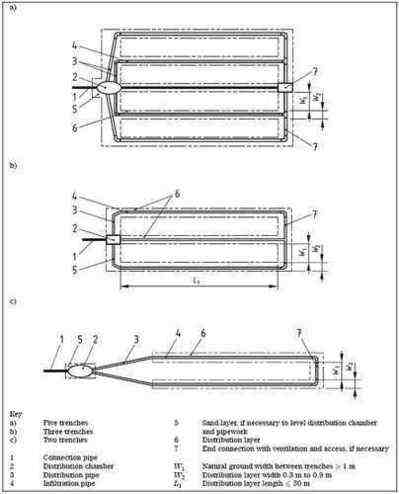
A septic tank soakaway is a DRAINAGE FIELD of solid, perforated pies, laid in parallel trenches, on 300mm of washed drainage stone. See our Soakaway Drainage Field page.
All septic tanks and their soakaway drainage fields have problems sooner or later.
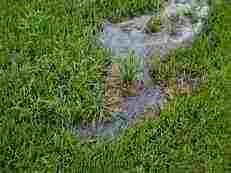
These problems often occur after periods of wet weather, with the septic tank overflowing, septic tank effluent appearing at ground level, seeping into ditches or backing-up the pipes. These are common septic tank problems.
How quickly thedrainage fieldproblem becomes a complete failure depends on several factors, which include how often the septic tank has been emptied, the nature of the soil, the height of the winter water table, heavy rain periods and the deterioration of the septic tank itself.
Under the Environment Agency General Binding Rules, BOREHOLE soakaways are not acceptable. Soakaway CRATES and TUNNELS are also not allowed for septic tank or any sewage effluent, only for rainwater. BEWARE of adverts on the internet. They also refuse septic tanks that are installed in Groundwater Source Protection Zones.All septic tanks whose effluent finds its way into ditches or streams, either directly, or by mistake, have to be replaced with sewage treatment plants within 12 months, or BEFORE this time, at the point of sale, if the property is sold. In our experience, this is the majority of septic tank systems.
Signs of a failed septic tank soakaway problem:
- Septic tank effluent surfacing on your land (see photo)
- Strong or bad odours coming from the septic tank or drains
- Pollution of nearby ditches or streams with effluent (see LEGISLATION)
- Slow flushing of toilets
- Gurgling in the drains
- Ground movement (dips) near the septic tank or soakaway drainage field
- Toilet overflowing
- Overflow at washing machine hookup
- Overflows into shower or bath when the sink empties
- Drain inspection chambers have standing effluent in them. These should be empty.
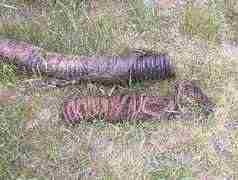
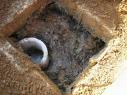
Please look at our other photos of SEWAGE DISASTERS on sewage reports or view these disasters:

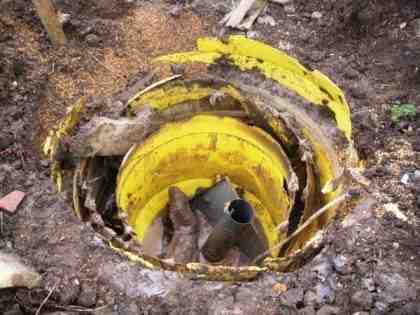
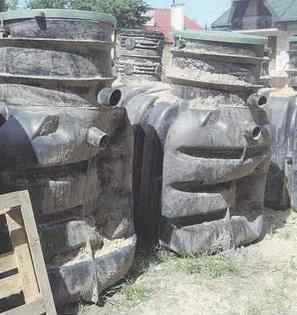
The reasons for septic tank and soakaway drainage field failure
1. Septic Tank Maintenance
All septic tanks require emptying ONCE A YEAR. They only hold 12 months sludge storage and if sludge starts to empty into the drainage field soil, it very quickly blocks the air spaces (porosity) in the soil, the effluent cannot soak away, you suffer a soakaway failure and the septic tank fills up, backing up the system. Most Septic Tanks are very poorly maintained and I hate to think how many Clients have told me (when their system has failed!) that septic tanks never need emptying! I have STOOD on the solid mass inside, covered only by inches of liquid, on many occasions!
2. Depth of the septic tank soakaway drainage field
All septic tank soakaway drainage fields must be constructed in the AEROBIC soil layer. This is soil which has oxygen in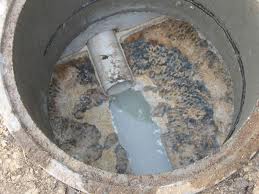 the air spaces between the particles and only occurs within the top metre of the soil.
This is because a foul water drainage field has two functions - the first is to soak the liquid away and the second is to treat the effluent and digest it via aerobic ( oxygen breathing ) soil bacteria.
Aerobic bacteria cause no problems for soil porosity.
Unfortunately, if the drainage field is deeper than one metre below ground level; and this includes the 300mm. gravel bed underneath the pipe, then it is in the ANAEROBIC soil layer and the bacterial growth is anaerobic.
Anaerobic bacteria cause huge problems as they produce a black slime which blocks the soakaway and the porosity of the soil.
The ridiculous fact is that most modern 'onion' shaped septic tanks have outlet levels deeper than one metre as standard! This almost certainly ensures that the soakaway drainage field is constructed in the anaerobic layer, making failure inevitable.
As Section H of the Building Regulations 1.39 states that ' Drainage fields should be designed and constructed to ensure constant aerobic contact between the liquid effluent and the subsoil' and the BS6297 2008 states that the maximum depth of the soakaway drainage field pipe is 700mm. why do leading manufacturers design septic tanks that do not comply? If you buy one of these, then reduce the height of the neck before installation to raise the outlet height.
It is even worse when 'Cowboy' installers do the work. We have had many incidents where septic tanks have been fitted back to front, making it impossible for the effluent to drain away, as the 'outlet' pipe is now higher than the 'inlet' pipe.
3. Nature of the soil and its effect on the soakaway drainage field performance
It is impossible to soak effluent away into a clay or clay-based soil in a normal soakaway drainage field. The porosity is so bad that they often fail within the first 5 years as their air spaces become filled with the high levels of suspended solids, often above 1200mg/litre, in the effluent. (This level of suspended solids can also be found in badly maintained sewage treatment units, and the same thing applies - you ruin your own soakaway drainage field!) In any case, even with a sandy soil, the porosity is eventually destroyed by the high level of suspended solids and by the black slime that results during the decomposition, although it may take 15 to 25 years. The air spaces fill with solids and the soil turns from a 'sponge' into a 'brick'. Adding a pump to the system to try to force the effluent into the drainage field only makes matters worse. The solids are 'blasted' into the soils air spaces, blocking the porosity even quicker and hastening your soakaway drainage field's demise! Adding commercially available 'friendly bacteria' sachets is also useless once a failure has occurred. Because there is then no flow into the soakaway drainage field, they can do NOTHING to restore the soil's porosity.
4. Winter water table and its effect on the soakaway drainage field
If the winter water table becomes higher than the septic tank outlet level, then the outlet pipe to the drainage field starts to drain water from the drainage field back into the septic tank. There is one thing that is certain: water ALWAYS finds its own level. This usually causes the septic tank to fill and settlement chambers mix with clarified effluent with the result that, when the level subsides, the resulting effluent is full of solids which then block the soil porosity in the soakaway drainage field. It is USELESS to try to jet out the outlet drain as all you are doing is forcing even more solids into the soil air spaces, making the situation worse. Always carry out a Trial Site Assessment Hole to determine the depth of the winter water table before you buy a building plot.
5. Deterioration of the septic tank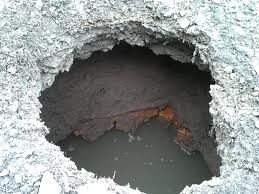
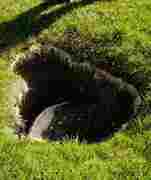
Many septic tanks' internal divisions/fins/rods and particularly the metal struts and bolts, (in the case of some 'Onion' septic tanks) and mortar joints (in the case of brick built ones), etc deteriorate, as raw sewage is a very corrosive environment. Concrete tanks are corroded by the hydrogen sulphide gas given off by the decomposing sewage. This turns into sulphuric acid on the lids and walls of the tank and disintegrates the concrete. The photo on the left is the hole made when a man stood on the lid and it collapsed under him. Note the crumbling nature of the concrete. NEVER stand on the lid.
When the septic tank is no longer able to clarify the sewage due to internal collapse, then the level of suspended solids in the final effluent rises dramatically and it is only a short time before soakaway failure occurs.
6. Sodium Binding in the soil
7. Another house joining the septic tank system
8. Heavy Rain and its effect on the septic tank system
Periods of unusually heavy rain can also cause severe issues. If the soil cannot absorb the rainfall, it cannot cope with the extra liquid volume from a sewage system as well.
9. More people using the septic tank system
If you have bought a house that previously had only one or two people using the system and you are a family of four, this will have vastly increased the amount of water entering the soakaway drainage field. The previous owners may not have had any problems but that does not mean that you won't, as the soakaway drainage field may not be able to cope with the increased daily flow. This is an important point to bear in mind when buying a house with a septic tank treatment system.
How to solve the septic tank soakaway failure problem
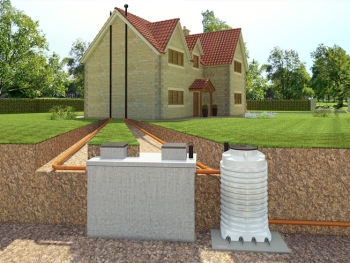
- You can install a complete new soakaway drainage field in a different part of your garden, if you are not in a Groundwater Source Protection Zone and have enough land (at least 100M², all of which is 15M from any building) of the correct soil type. You must also have a winter water table that never comes to within a metre of the bottom of the bottom of the drainage field and no rock within 1M of the bottom of it. These are all new rules which you must comply with. Unfortunately, around 70% of all sites fail one or more of these conditions and if so, new below ground soakaway drainage fields are not an option. Our own copyrighted above ground soakaway draianage fields may be an option, but new soakaways are not cheap. Please click on SEPTIC TANK SOAKAWAYS for a detailed explanation of these new rules.
-
You can scrap the entire system and install a full sewage treatment unit which CAN, if they comply with the General BInding Rules, discharge to a ditch, stream, land drain etc. The effluent is gone from your property and with it, all the hassle of soakaways. This is now the cheapest option available if you have a ditch or other watercourse that is accessible. Please visit the VORTEX sewage treatment plant webpage.
-
You can buy a 'conversion' kit to fit inside the septic tank, but you MUST be aware that these 'conversions' are in contravention of the Environment Agency General Binding Rules, as they do not have and cannot get the required EN 12566 Certification. You will never obtain an Environment Agency Exemption for these conversion kits and in any case, they became illegal on 1st July 2013 under the Construction Products Directive. Septic tanks were never designed to become a sewage treatment unit. They have an insufficient number of chambers and the wrong configuration of chambers which are the wrong size to adapt. In order to obtain an Permit for these, you would have to dig up your septic tank and send it, complete with the conversion kit, to an EN Test Centre in Europe for performance testing. If it passed, you would be given the required EN 12566-3 Certificate, but it would cost you around £30,000 for the testing.
-
You can use your septic tank as the first settlement stage of a full 3
 stage sewage treatment unit. The Septic Tank Conversion unit is installed AFTER the septic tank, connected to the outlet pipe and will convert your system into a full sewage treatment unit.
The following sewage treatment plants can be installed after the septic tank, to clean the liquid to a compliant standard:
FilterPod sewage treatment plant
QUANTUM sewage treatment plant
VORTEX sewage treatment plant.
They all have the required EN12566-6 certification fo this purpose. Most sewage treatment plants do not.
The final effluent from an aerated septic tank conversion unit is the same standard as a full sewage treatment unit. Unlike septic tank effluent, the resulting water can be discharged to a ditch or stream etc. The septic tank, having a greater capacity than in an 'all in one' sewage treatment unit, can still last at least 12 months between emptyings. The units are small and the damage to gardens, etc. is limited, though they are no cheaper than a full sewage treatment plant.
-
If you have recently bought a house with a defective septic tank system, it is sometimes possible to use the Legal System to make your Solicitor pay for the repair or replacement works. It is also often possible to have the total cost of the replacement system paid for by your Buildings Insurance company. See our sewage systems insurance page and contact James Webb on 01759 369915 to discuss.